
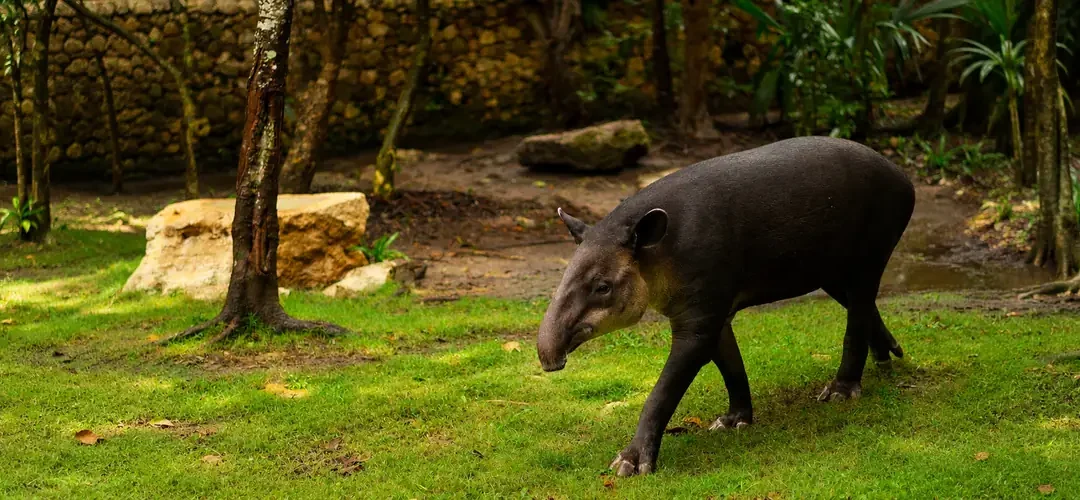
Corcovado Wilderness Lodge sits on a 189-acre private reserve bordered on 3 sides by Corcovado National Park, so Baird’s tapirs walk through the property often. Guests have spotted them in the gardens before their first guided tour, and guided walks into Corcovado leave on foot from the reserve’s own trails, so you’re in prime tapir habitat for your whole stay.
Tapirs move through the Osa Peninsula mostly after dark, unhurried, the largest land mammal in Central America browsing the forest with a snout that looks borrowed from a small elephant. In mango season they’ll stop to work through the fallen fruit.
For a lot of travelers, that’s the sighting at the top of the list. Monkeys, sloths and toucans turn up all over Costa Rica, but a tapir asks for more, the right forest and the right hour plus a little luck, and the forest that gives you the best odds is Corcovado, the place National Geographic called the most biologically intense place on Earth.
Corcovado Wilderness Lodge sits right at the edge of it, and the tapirs cross that line year-round, whenever they please.
Wanted to meet a tapir for years? This is where you come looking. Book your stay here.
Where is the best place to see a tapir in Costa Rica?
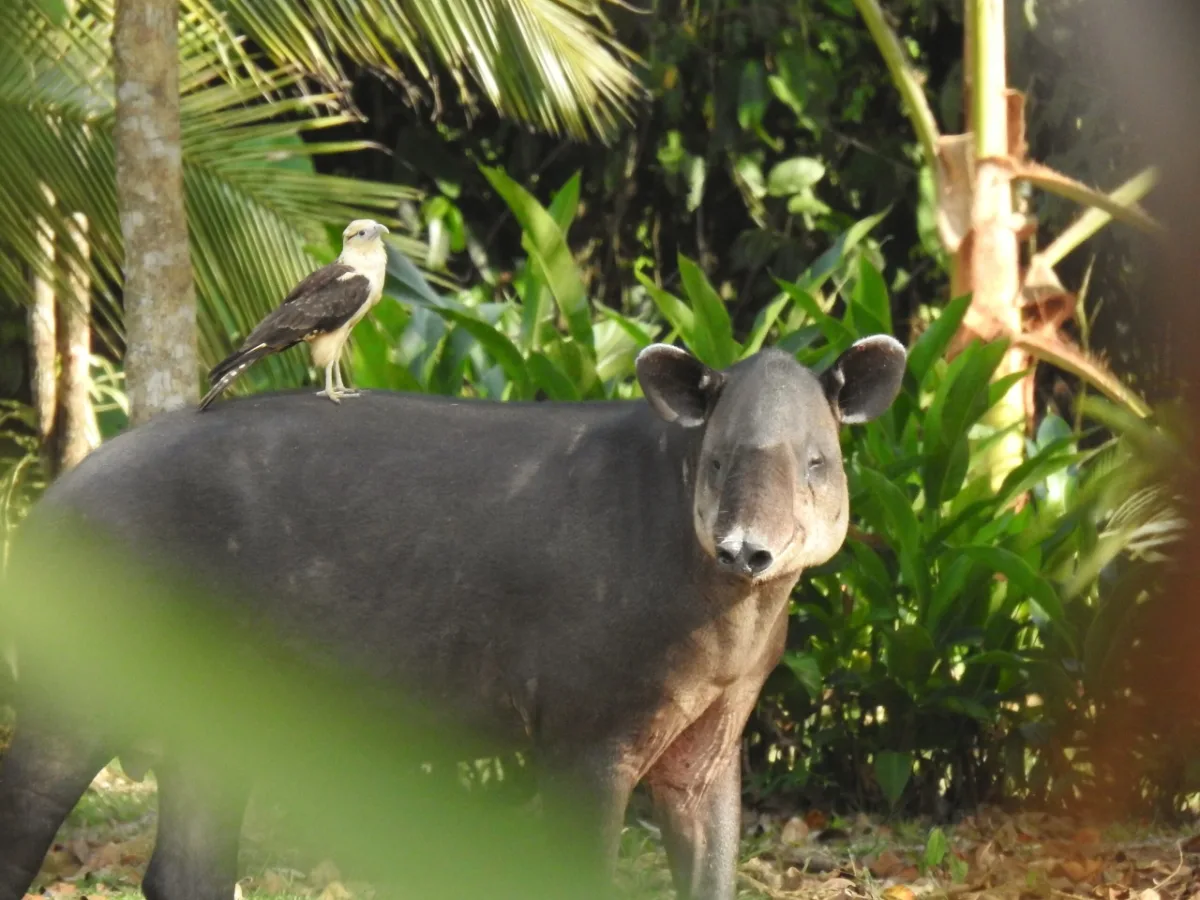
Corcovado National Park on the Osa Peninsula is the best place to see a tapir in Costa Rica, because the animals have everything they need here: old-growth rainforest to browse, rivers to cool off in and wild beaches to wander. And they need every bit of it. There are fewer than 5,500 Baird’s tapirs left in the wild, more than 1,000 of them in Costa Rica, and the park is one of the places keeping them safe.
The forest around the Sirena Ranger Station has the strongest reputation for sightings. Researchers there watched a mother and her calf swim across the Sirena River in 2021, a good reminder of how close to water tapirs like to live.
Sirena is a full-day outing by boat, but you can start much closer. Our guided walks head into the park on foot from the reserve’s own trails, so you’re in tapir country from the moment you step off the boat, and many guests meet one without leaving the property at all.
Can you see tapirs at Corcovado Wilderness Lodge?
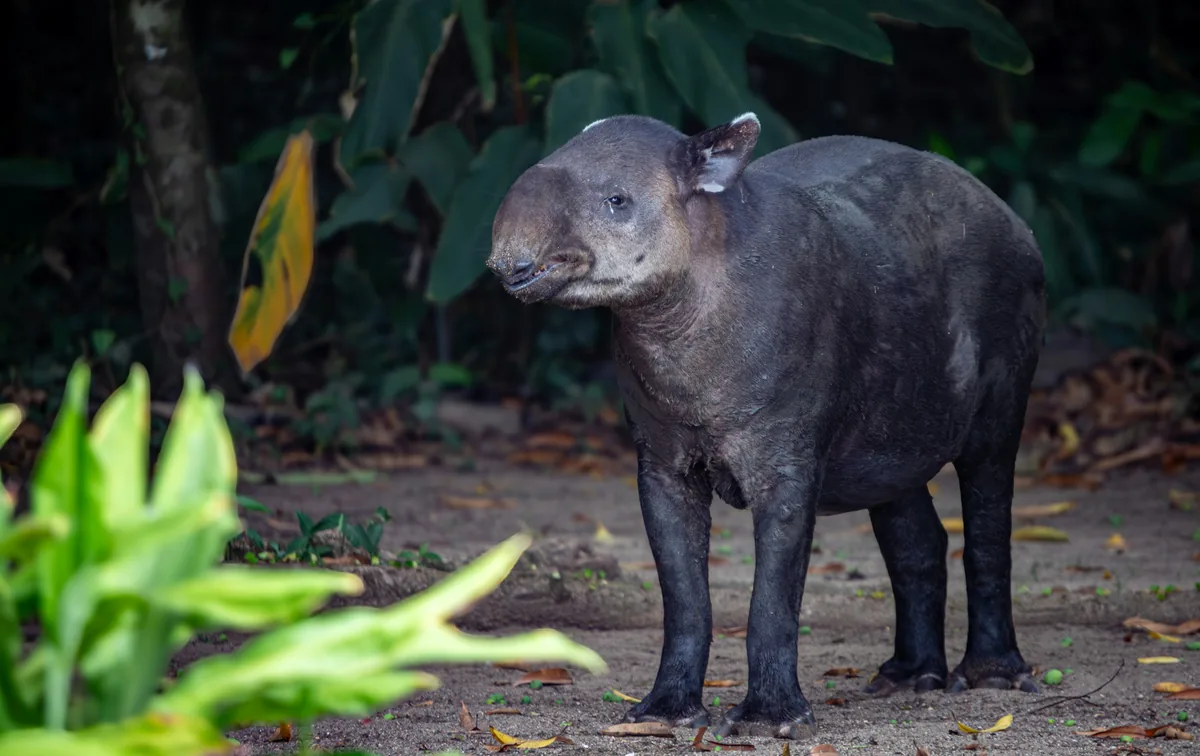
Yes, you may see tapirs at Corcovado Wilderness Lodge any time of year, because the reserve runs straight into the park and they treat the grounds as part of their range. When the mangoes fall, the central garden’s the place to look. Our team sees them there regularly, nose down under the trees, working through the fruit one mango at a time (thorough, and messy about it). It’s a big animal to find standing in a garden!
Guests spot them too. One review on our homepage describes tapirs in the central garden “enjoying seasonal mangoes,” alongside monkeys and the occasional tayra, and another guest counted one among their first-day sightings, next to a puma and two anteaters.
So keep an eye out on the walk back from dinner at Terra Kitchen, or on a garden path at first light. Step outside your villa and you’re already in their forest.
Facts about tapirs: what makes this rainforest mammal worth the trip?
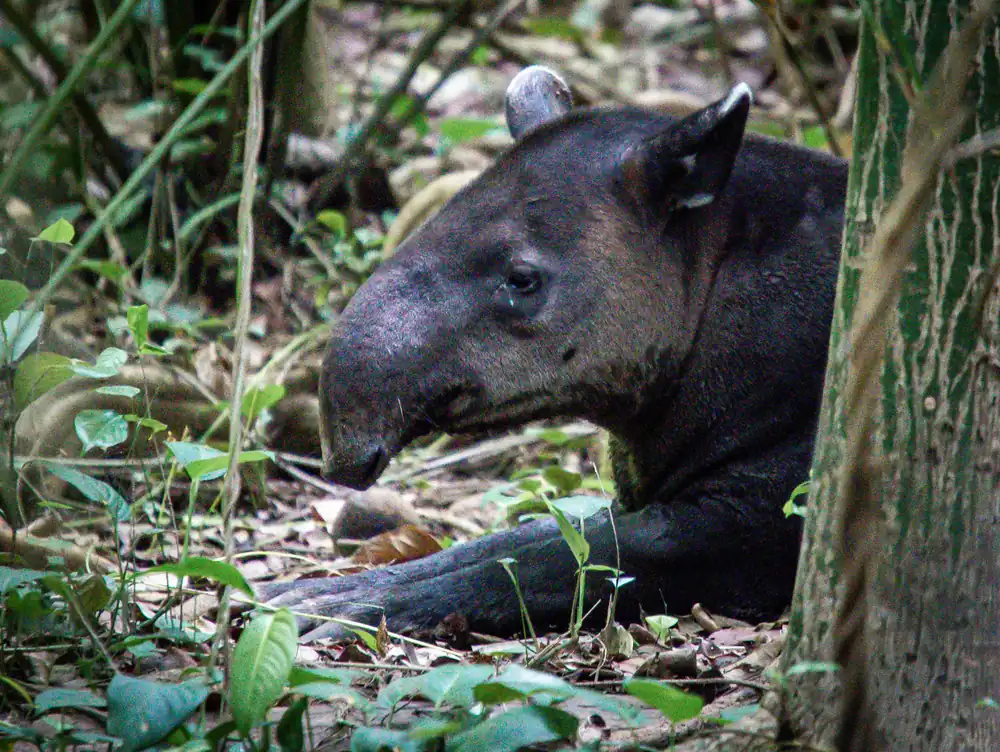
A Baird’s tapir (Tapirus bairdii), also called the Central American tapir, is worth the trip for its size alone. It’s the region’s largest terrestrial mammal, a reddish-brown browser that can top 550 pounds, and the first thing you’ll notice is the snout. That short, mobile proboscis pulls leaves and fruit within reach as it feeds.
Costa Ricans call it the danta. The English name honors Spencer Fullerton Baird, the 19th-century American naturalist, and the species ranges from southern Mexico through Belize and Panama into northern Colombia, from lowland swamps up into cloud forests.
Its closest relatives outside the tapir family are horses and rhinos, and the design has barely changed in 35 million years. You can see the family resemblance in the feet, four toes in front and three toes behind, and your guide may point out that three-toed print in the creek mud, or fresh scat that means one passed through recently.
Spot a calf and you’ll see the white spots and stripes all baby tapirs are born with, which make it look a lot like a watermelon (a brown one, with legs). The pattern fades as they grow. Adults are strong swimmers, and a startled tapir usually heads straight for the river, where it can stay under and breathe through its snout like a snorkel.
Across Central and South America, habitat loss and hunting have put Baird’s tapirs on the IUCN Red List as an endangered species. But Costa Rica is the one country where their numbers have recovered, after decades of conservation efforts and forest protection.
They’ve earned their nickname, the gardeners of the forest. The seeds they eat pass through the digestive system and sprout far from the parent tree, helping new trees take root across the Osa. Our reserve is part of that protected forest, and the Restor Forest Research Lab studies the biodiversity and land use around the property and Corcovado National Park.
When are you most likely to get a tapir sighting at Corcovado?
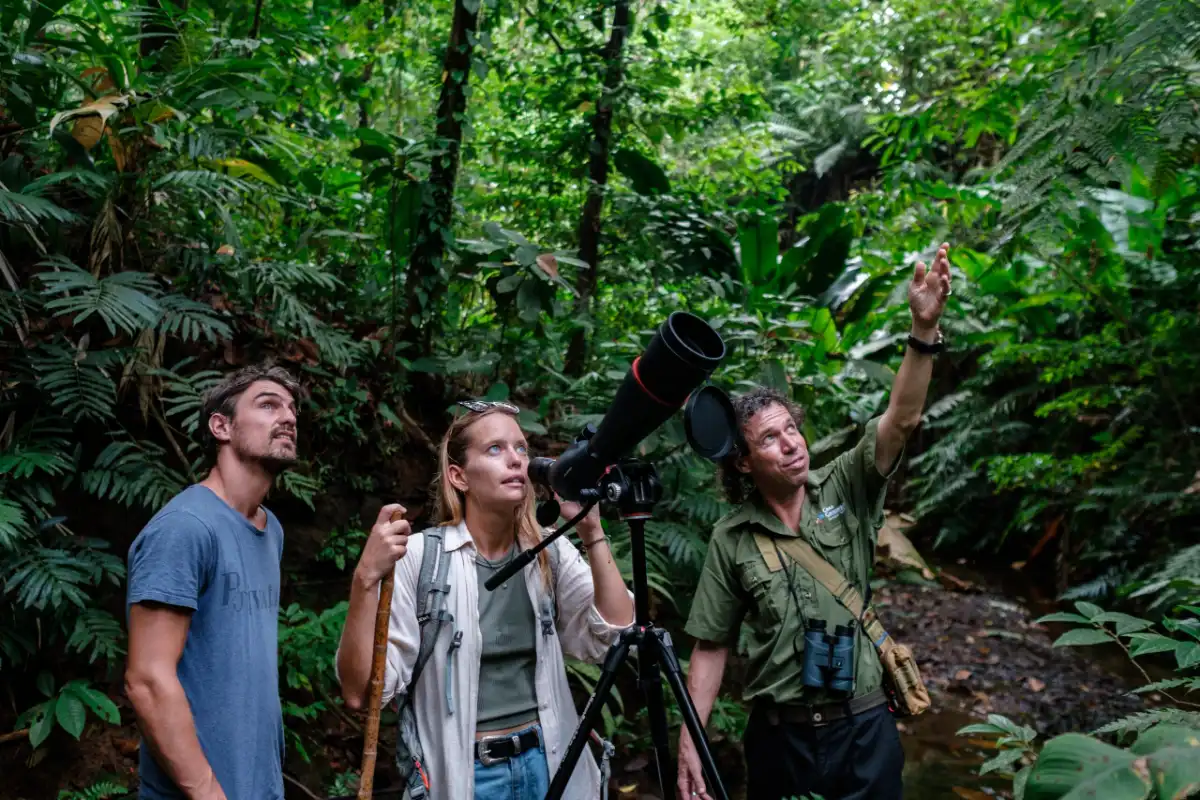
Your best chance of a tapir sighting at Corcovado comes after dark and around first and last light, because tapirs are primarily nocturnal and rest through the heat of the day. Plan around the edges of the day, and save a slow walk through the gardens for after dinner.
Two of our guided tours fall right in those hours. The Early Bird Tour heads out while the forest is still cool, and after dark the Night Walk goes looking for everything that moves at night, from frogs to tapirs. Guests who’ve joined a guided hike and the Night Walk have counted a tapir among their sightings, and your guide will teach you to listen for the high whistle tapirs use to call to each other.
The gardens are worth a slow look any time of year, and in mango season they’re where we’d start. For the bigger picture on rain, trails and wildlife through the year, our guide to the best time to visit the Osa for wildlife covers it season by season.
How do you find a tapir in Corcovado National Park?
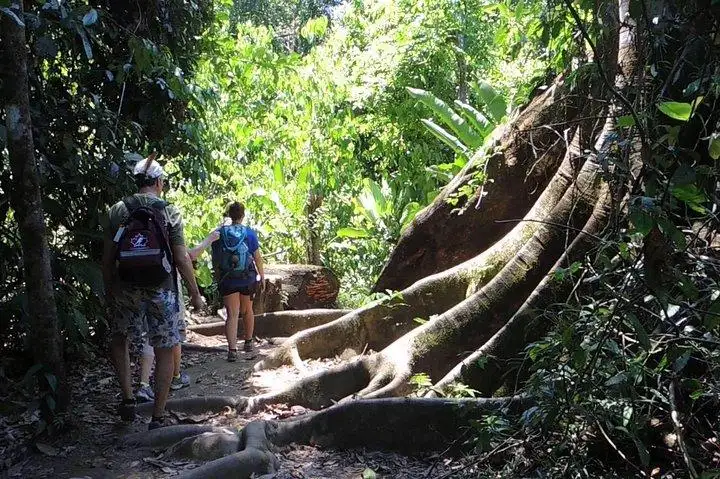
You find a tapir in Corcovado National Park by walking with a certified guide who knows where they feed, rest and cross water, and every visitor needs one there anyway. Our post on whether you need a guide for Corcovado covers the rules.
Your guide reads the forest for you, watching the creek crossings, the muddy wallows and the fruiting trees, since that’s where they come to find food and cool off. Guests have written about guides like Manfred Garcia, Tebby, Stephen and Johan by name. One family’s guided hike turned up monkeys, tapirs, a snake, coatis and an anteater, with a special mention for their walk with Tebby.
On the Corcovado National Park Tour, you walk straight in from the lodge on foot. For a longer day, take the Sirena Station Hike by boat to Corcovado’s most famous wildlife area. They share that forest with their natural predators, jaguars, pumas and American crocodiles (if you’re curious about the cats, here’s our guide to the wild cats of Costa Rica).
Is a tapir the reason for your trip?
Our Wildlife Adventure Package bundles a Night Walk, Caño Island snorkeling or diving, and your choice of the Sirena Station Hike, the CLARO del Bosque Expedition or the Arboreal tree climb. See the Wildlife Adventure Package.
How should you watch these gentle giants of the forest?
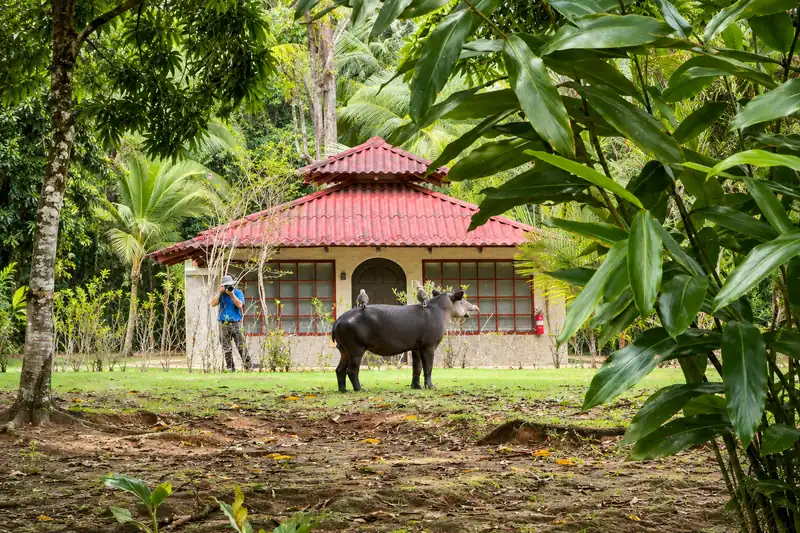
Watch these gentle giants of the forest from a good distance and with your voice low, so they keep feeding and you get to take in their natural behaviors. Tapirs are usually calm around people, and it’s easy to keep them that way:
- Room: Give it space, especially a mother with a calf, and let it choose its own path past you.
- Light: Point flashlights at the ground and skip the camera flash.
- Food: Let the mango trees do the feeding. It’ll find plenty on its own.
- Distance: Let your guide set it on the trail. They’ll get you close enough for the photo.
How to plan a stay around seeing a tapir
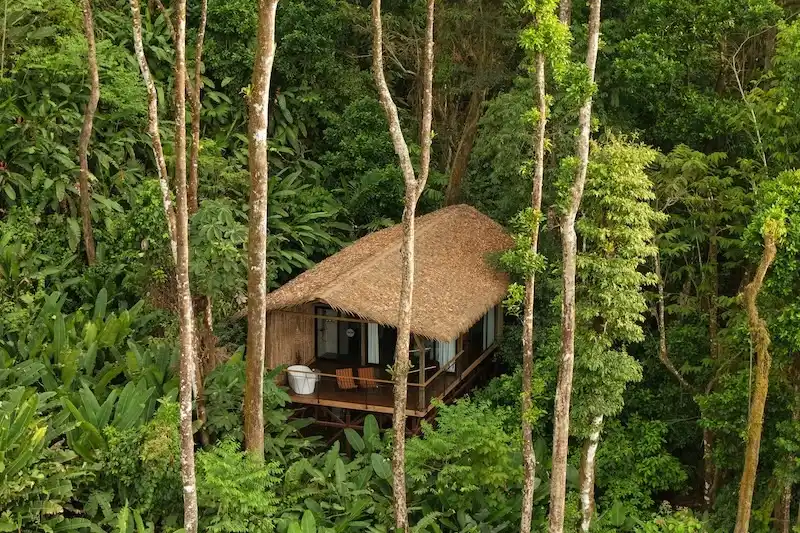
A tapir trip comes down to one thing, and it’s giving yourself enough dawns and dusks on the reserve:
- Book direct for at least two nights: Every extra evening in Corcovado is another chance to spot these incredible creatures.
- Take an Early Bird Tour: Dawn is one of the best times of day to spot a tapir, and the Early Bird Tour gets you out while the jungle is still cool.
- Add the Night Walk and a guided Corcovado tour: Between them you’ll cover both ends of its day, and our tours and experiences page has the full list.
- Spend your evenings in the garden: The trails and nature walks on the reserve are yours to explore at your own pace, and the central garden is where the mango trees grow.
Ready to plan your stay on the Osa?
Check your dates at Corcovado Wilderness Lodge.
Frequently asked questions about tapirs in Costa Rica
Yes, Costa Rica is home to the Baird’s tapir, the largest land mammal in Central America, and more than 1,000 live in the wild here out of fewer than 5,500 worldwide. The Osa Peninsula and Corcovado National Park are among the best places in the country to see one.
Yes, tapirs are endangered, and Baird’s tapir is listed as an endangered species on the IUCN Red List, assessed with the IUCN Tapir Specialist Group. Costa Rica’s protected forests have helped its population recover, which is part of why a tapir sighting on the Osa is possible at all.
Corcovado National Park on the Osa Peninsula is the best place to see tapirs in Costa Rica, and the forest around the Sirena Ranger Station is the best-known spot for them. At Corcovado Wilderness Lodge, right on its border, they also visit the gardens to eat fallen mangoes in season, on top of the leaves, shoots and fruit they browse in the forest.
Tapirs are usually calm, shy animals that keep their distance from people. Give them space, especially a mother with a calf, and follow your guide’s lead on how close to stand.
Yes, you may see a tapir at Corcovado Wilderness Lodge without a park visit, because they cross the lodge’s private reserve and gardens often. Evenings and early mornings give you the best chance, and the central garden is worth a slow walk when the mangoes fall.
Tapirs are most active at night and around dawn and dusk, because they’re primarily nocturnal and rest through the hottest hours. That’s why the Early Bird Tour and the Night Walk are the two best tours for a tapir sighting.
Planning your wildlife days on the reserve? See all of our tours and experiences.